
This opens a search on REI rather than a product page — we haven't verified a direct link for this one, and the results may include other brands.
We may earn a commission if you buy through this link, at no extra cost to you.
Sea to Summit Ether Light XT Insulated — Specs & Analysis
Manufacturer specifications, compared against every other sleep systems in our database. We do not test gear in the field — we measure, verify, and compare.
The Ether Light XT uses Sea to Summit's Air Sprung Cells to create a thick, comfortable sleeping surface with an R-value of 3.2. The multi-functional valve allows quick inflation and instant deflation, and the 10cm thickness rivals the comfort of home mattresses.
Who Is the Sea to Summit Ether Light XT Insulated Best For?
Comfort-focused bikepackers who want a plush night's sleep and don't mind the extra grams. If that describes your riding style, the Ether Light XT Insulated should be at the top of your shortlist. It sits in the Sleep Systems category alongside 19 other products we track.
How It Compares
At 490g and $180, the Ether Light XT Insulated is 240g heavier than the lightest option in this category (the Therm-a-Rest NeoAir UberLite at 250g). The most budget-friendly option is the Cascade Designs Therm-a-Rest Z Lite Sol at $50.
The price-to-weight ratio comes in at $37 per 100g — a premium price point, but you're paying for quality, materials, and design that justify the investment for serious bikepackers.
What We Like
- +10cm thick pad offers exceptional comfort
- +R-value of 3.2 handles shoulder-season cold
- +Air Sprung Cells minimize motion transfer
- +Multi-functional valve speeds up inflation and deflation
Watch Out For
- −Nearly double the weight of ultralight alternatives
- −Packed size is noticeably larger than minimalist pads
- −Premium comfort comes at a premium price
The Bottom Line
We haven't scored the Sea to Summit Ether Light XT Insulated, and neither has anyone else we can cite. It's here for its verified specifications and dimensions, which is what the fit tools run on — a score is an editorial judgement, and we don't hand one out until someone has a basis for it. What this page can tell you is measured: 490g, $180, and how both sit against every other sleep systems product we track.
The price and weight above have not yet been checked against the manufacturer's own page. We are working through the catalogue and saying so as we go, rather than letting silence imply otherwise.
Specifications and dimensions come from the sources listed above. Where a page draws on first-hand riding, it says so.
What it packs down to
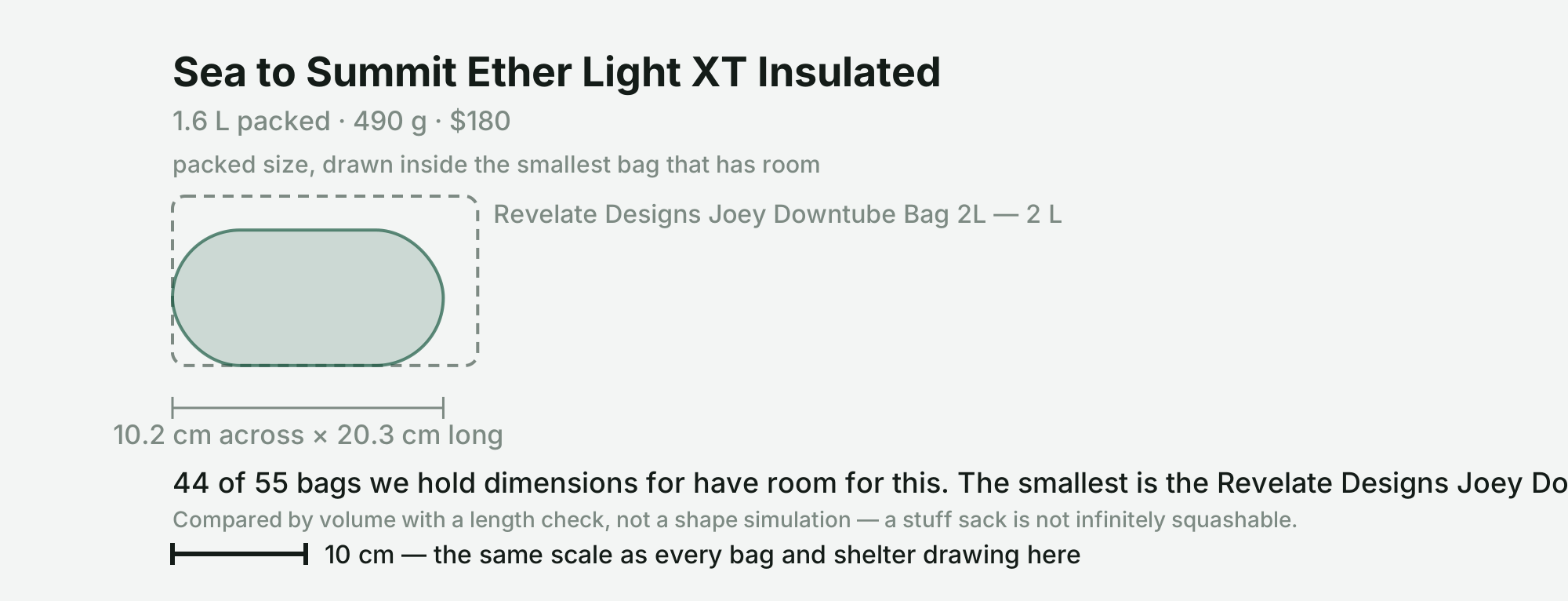
Sea to Summit publishes a packed size of 4 x 8 in, which is 1.6 litres as a stuff sack. Of the 55 bags we track that publish a capacity, 44 have room for it and 11 do not.
Volume is computed from Sea to Summit's own packed size, treating a two-dimension figure as a stuff sack. Bag capacities are the makers' published figures, not ours — 12 of the bags we hold dimensions for publish no capacity and are left out of the count rather than assumed. A stuff sack does not reshape itself, so read the headroom as room to spare rather than a guarantee it goes in easily.
How it compares
Against the 20 sleep systems we hold published specs for.
At 490g the Ether Light XT Insulated is lighter than 7 of 19 alternatives we track. The category median is 465g.
At $180 it undercuts 12 of 19 of them, against a median of $235. That works out at $37 per 100g — below the $53 median for sleep systems.
Weight and price come from published specifications. Cost per 100g is a blunt measure — it rewards light gear and says nothing about durability or whether the thing works — so treat it as one input, not a verdict.
More in Sleep Systems
Sleeping bags, quilts, and pads that pack small and keep you warm on the trail.