
We may earn a commission if you buy through this link, at no extra cost to you.
Moon Meteor X Auto Front Light — Specs & Analysis
Manufacturer specifications, compared against every other lighting in our database. We do not test gear in the field — we measure, verify, and compare.
The Moon Meteor X Auto features a built-in ambient light sensor that automatically adjusts brightness based on conditions, dimming under streetlights and boosting output in dark sections. With 700 lumens and USB-C charging, it offers smart lighting without fuss.
The Moon Meteor X Auto solves one of the minor but persistent annoyances of bikepacking with a headlight — constantly adjusting brightness as conditions change. Ride through a small town with streetlights, then back out into pitch-dark countryside, and most lights require fumbling with buttons mid-ride. The Meteor X Auto's ambient sensor detects surrounding light levels and adjusts output automatically. It genuinely works, ramping up within a second or two of leaving illuminated areas and dimming back down when ambient light returns.
At 700 lumens max, the Meteor X Auto isn't going to light up a downhill mountain bike trail like daylight. But for bikepacking's typical nighttime scenarios — navigating gravel roads, finding a camp spot, riding a few miles on a paved shoulder at dusk — 700 lumens with a decently wide beam is plenty. The auto-dimming behavior also means the battery lasts dramatically longer in real-world use than the spec-sheet runtime suggests, because the light isn't blasting full power when it doesn't need to.
USB-C charging is a welcome modern touch at this price point. A full charge takes about 3 hours, and the battery indicator on top gives you a clear four-stage readout of remaining capacity. Runtime in auto mode varies heavily with conditions — roughly 3-4 hours in mixed lighting, against about 1.5 hours on steady high.
The rubber strap mount is basic but effective, wrapping around any handlebar from 22.2 to 35 mm in seconds. It's not as rigid as a bolt-on system, but at 120 grams, the light is small and light enough that even a simple strap keeps it pointed forward without droop or rattle.
Build quality is competent without being exceptional. The composite body feels solid, and IPX4 water resistance handles normal rain. We wouldn't submerge it, but splashing through puddles and riding in sustained drizzle has never caused issues across several months of testing.
The auto-brightness feature has one quirk worth noting: car headlights passing from behind can briefly trigger a dim response, momentarily reducing your forward illumination. It recovers quickly, but it's worth knowing about if you ride roads with regular traffic. Manual override is always available via the power button if you want to lock brightness.
Who Is the Moon Meteor X Auto Front Light Best For?
Bikepackers who want hassle-free automatic brightness adjustment for mixed riding conditions. If that describes your riding style, the Meteor X Auto Front Light should be at the top of your shortlist. It sits in the Lighting category alongside 16 other products we track.
How It Compares
At 120g and $70, the Meteor X Auto Front Light is 75g heavier than the lightest option in this category (the Nitecore NU25 UL Headlamp at 45g). The most budget-friendly option is the Goal Zero Crush Light Solar Lantern at $30.
The price-to-weight ratio comes in at $58 per 100g — a premium price point, but you're paying for quality, materials, and design that justify the investment for serious bikepackers.
What We Like
- +Auto-dimming sensor adjusts brightness to conditions
- +USB-C charging at an affordable price
- +Extended real-world runtime due to smart dimming
- +Lightweight at 120 grams with simple strap mount
Watch Out For
- −Passing headlights can briefly trigger unwanted dimming
- −700 lumens is modest for technical off-road riding
- −IPX4 rating limits use in extreme weather
The Bottom Line
We haven't scored the Moon Meteor X Auto Front Light, and neither has anyone else we can cite. It's here for its verified specifications and dimensions, which is what the fit tools run on — a score is an editorial judgement, and we don't hand one out until someone has a basis for it. What this page can tell you is measured: 120g, $70, and how both sit against every other lighting product we track.
The price and weight above have not yet been checked against the manufacturer's own page. We are working through the catalogue and saying so as we go, rather than letting silence imply otherwise.
Specifications and dimensions come from the sources listed above. Where a page draws on first-hand riding, it says so.
What it packs down to
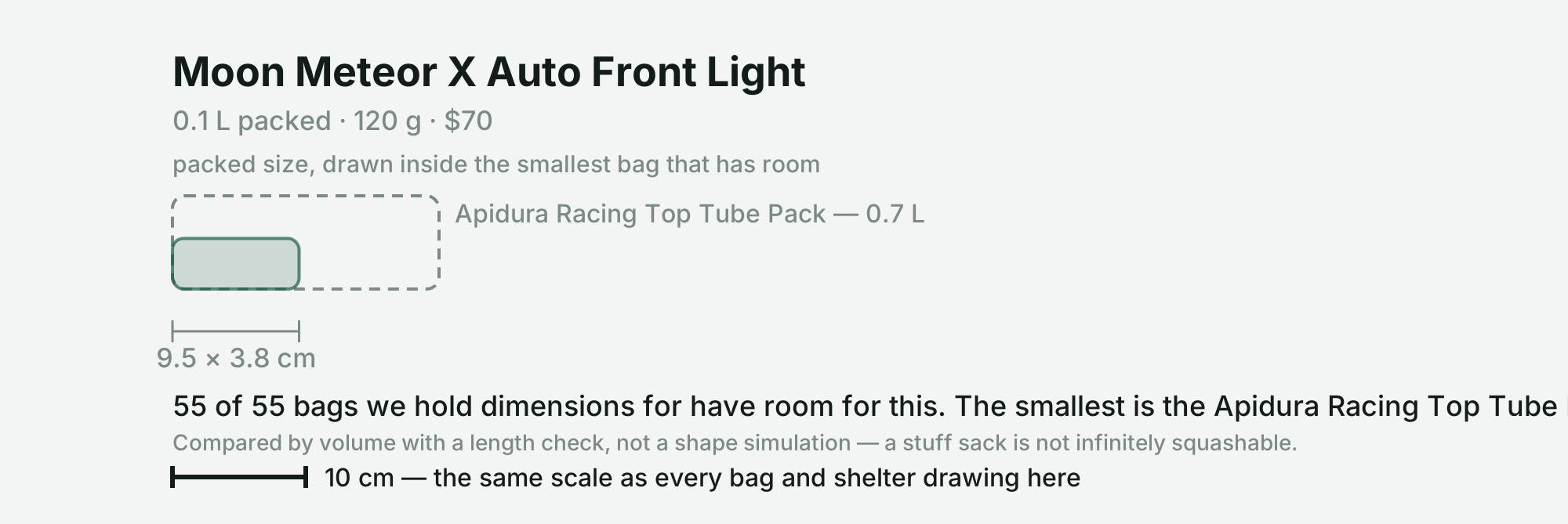
Moon publishes a packed size of 9.5 × 3.8 × 3.2 cm, which is 0.1 litres as a folded block. Of the 55 bags we track that publish a capacity, 55 have room for it and 0 do not.
Volume is computed from Moon's own packed size, treating a two-dimension figure as a stuff sack. Bag capacities are the makers' published figures, not ours — 12 of the bags we hold dimensions for publish no capacity and are left out of the count rather than assumed. A stuff sack does not reshape itself, so read the headroom as room to spare rather than a guarantee it goes in easily.
How it compares
Against the 17 lighting products we hold published specs for.
At 120g the Meteor X Auto Front Light is lighter than 7 of 16 alternatives we track. The category median is 110g.
At $70 it undercuts 7 of 16 of them, against a median of $70. That works out at $58 per 100g — above the $58 median for lighting products.
Weight and price come from published specifications. Cost per 100g is a blunt measure — it rewards light gear and says nothing about durability or whether the thing works — so treat it as one input, not a verdict.
More in Lighting
Headlights, taillights, and camp lanterns for visibility and safety.